Why your heat pump won't turn on in Maine

Explain the job once and skip repeating it on every call.

Fill out one form

Why won't my heat pump turn on?

A cold house with no heat from the heat pump is a real problem in Maine, especially when oil is the backup and every degree matters for keeping the people inside comfortable. Before anything else, you want to know if this is something simple or something that needs a technician out to the house.

Usually a tripped breaker, a bad thermostat setting, or a frozen outdoor unit

Most of the time it's one of three things. The breaker tripped, often after a power blip, and the system just needs it reset. The thermostat is set to a mode or temperature that doesn't call for heat, which happens more than people expect when someone bumps it by accident. Or the outdoor unit has iced over and the defrost cycle isn't clearing it, which shows up more in Maine winters than almost anywhere else, since the unit works hardest exactly when ice is most likely to form. If the breaker won't stay reset, or the outdoor unit is solid with ice and not defrosting on its own, that points to something inside the system, like a failed control board or a stuck reversing valve, and that's a repair job.

A dimly lit bedroom at dusk with a made bed, a table lamp on a nightstand, and a condensation-covered sash window with a dark curtain.

It's past eleven and the bedroom is still thick with heat. You kicked the sheet off an hour ago and it's damp where your legs were. The window's fogged at the edges, cracked an inch, but there's no breeze behind it, just the same heavy air sitting in the room. You get up and check the thermostat in the hall. It's set to cool, same as always, and the heat pump isn't doing anything about it. You press the buttons again like that will change something. Downstairs, the house is just as still. Back in bed, you lie on top of the covers and try to find a cooler spot on the pillow.

Call Now or Hold Off

Call for repair now

  • If the outdoor unit is dead quiet and the thermostat shows no response, a technician can usually diagnose the cause same day.
  • Breaker trips that keep repeating point to a short or a failing component, and that gets worse the longer it runs.
  • With oil as backup, you're burning more of it every day the heat pump sits dead, and oil here isn't cheap either.
  • A local tech who services heat pumps all winter has likely seen your exact fault before, on the same models common in Maine homes.
  • Cold snaps are when heat pumps get pushed hardest, and a unit that won't start now may strand you on the coldest night of the year.

Wait and watch it

  • If the unit lost power briefly and everything else in the house did too, give it a few minutes to reset on its own.
  • A thermostat with dead batteries or a tripped breaker you can safely reset yourself costs you nothing but a few minutes.
  • If outdoor temperatures are mild and oil heat is covering the house fine, there's less urgency to chase the problem today.
  • Watching for a pattern, like it quitting only on the coldest mornings, gives a technician a better clue when you do call.
  • If it's a brand new install, waiting a day to see if it was a one-time fault can save you an unnecessary call.
A woman in a knitted shawl sits in a living room with a fireplace, shelves, a sofa with cushions, and a lamp by a bright window, looking off to the side.
A woman with long brown wavy hair in a green shirt over a white top stands in a living room with built-in white shelves, a ceiling fan, a potted plant and a sliding glass door.
A woman with shoulder-length gray-streaked hair in a light gray knit sweater stands smiling and looking off to the side in a living room with a sofa, houseplant, framed picture, and sunlit sliding glass door.
A woman with shoulder-length curly gray hair wearing a gray knit sweater stands near a window with a sheer curtain, looking to the side, with a blurred interior room behind her.

One form, no calling around

A heat pump that won't start usually means a short somewhere, a failed board, or a stuck contactor, and figuring out which one calls for someone who's inside these units regularly, not a guess over the phone. You could spend an evening calling around Maine for someone who works on heat pumps instead of just furnaces and oil burners, then explain the same symptoms again to the next company when the first one can't get out this week. That's hours you don't have while the house sits cold and the backup oil heat runs up a bill you weren't planning on. Submitting this request sends your situation once to a local contractor who handles heat pumps all season, the kind of person who's already seen this exact failure a dozen times this winter and knows what to check first. No retyping your address and symptoms for three different companies, no sorting through quotes that all sound the same. One call, to someone who already knows what's likely wrong before they pull up to your driveway.

Why it won't just restart itself

A furnace that stops will often retry on its own once a part cools down or resets. A heat pump that's dead at the thermostat usually isn't waiting on a timer. If the compressor won't engage or the outdoor unit never kicks on, something in the circuit has failed outright, a contactor stuck open, a capacitor that's lost its charge, a control board that's not sending signal. None of those clear up by waiting. The unit needs someone to open it up, test the parts, and replace what's failed before it runs again.


What the breaker tells you

If the breaker for the heat pump keeps tripping, that's the system telling you something is drawing more current than it should. A single trip can be a fluke. A breaker that trips again within a day or two is a short in a wire, a failing motor, or a compressor pulling too hard on startup. Leaving it switched back on and walking away risks damage to parts that cost far more to replace than the one causing the short. That pattern is worth noting before a technician arrives, since it narrows down where the fault is.

A woman with her hair in a bun holds a sleeping young child against her chest, both wrapped in a textured beige knit blanket on a sofa in a dimly lit room with a lamp, framed picture, and bookshelf behind them.
A gray-haired woman in a cream knit sweater stands in a dimly lit kitchen at night, looking to her right, with a round loaf of bread in the foreground and a dark window and potted plant behind her.

Nothing happens outside your house until the thermostat sends a small signal to a control board in the air handler. That board runs through safety switches first. A float switch, a high pressure cutout, anything like that has to be closed before it will send power any further. If those check out, the board energizes a contactor, a relay about the size of a matchbox, and that's what actually closes the circuit to the compressor and outdoor fan. A lot of the time the indoor blower runs fine and the outside unit stays dead, and the contactor is the usual reason why. There's also a reversing valve that has to sit in the right position for heat. If it's stuck in the cooling position, the unit can power on and still never put out warm air. Cold climate systems add one more step: a defrost cycle that reverses things briefly to clear the outdoor coil. A fault in that control can leave the whole unit locked out until someone resets it by hand.

How the start signal travels

  • The thermostat sends a low voltage signal to a control board inside the air handler before anything outside moves.
  • That board checks safety switches first, things like a float switch or high pressure cutout, and won't pass power along if one is open.
  • Once the board clears those checks, it energizes the contactor, a small relay that closes the circuit feeding the outdoor unit.
  • A stuck or burned contactor is a common reason the indoor side runs fine but the compressor and fan outside stay silent.
  • The reversing valve has to be in the right position for heat mode, and a valve stuck in cooling position can keep the system from producing heat even when it powers on.
  • Cold climate heat pumps in Maine also run a defrost cycle that briefly reverses this process, and a control fault there can leave the unit locked out until it's reset.
An outdoor air conditioner condenser unit with rust spots on its top grille sits on a concrete pad beside a house with light horizontal siding, with conduit lines and an electrical box on the wall and a mulch bed to the right.
Before you get your heat pump repair
A gray outdoor condenser unit on a concrete pad beside a light-colored lap-sided house, with a wall-mounted disconnect box, refrigerant lines, mulch bed and shrubs, and a concrete walkway in the foreground.
After you get your heat pump repair

Power costs 27.69 cents per kilowatt-hour statewide

At 27.69 cents per kilowatt-hour, running a heat pump on backup resistance heat or leaving it to short-cycle while it struggles gets expensive fast. A unit that won't start cleanly is worth fixing quickly, not just for comfort but for what it's pulling from the meter.

EIA-861 2025 statewide residential average

A heat pump that won't turn on comes down to a short, a failed board, or a stuck contactor, and the fix starts with finding out which one. That takes someone who opens these units up all winter in Maine homes, not a guess made over the phone. A local contractor who sees this brand and this failure every season knows where to look first, and you're dealing with that one person directly, not fielding calls from three different companies trying to win the job. No oil backup running longer than it should, no outdoor unit sitting dead in the cold while you wait. You get a diagnosis, a repair, and the heat pump working the way it did before it stopped. That's where this ends: the unit runs, the house warms back up, and you know who to call if it happens again.

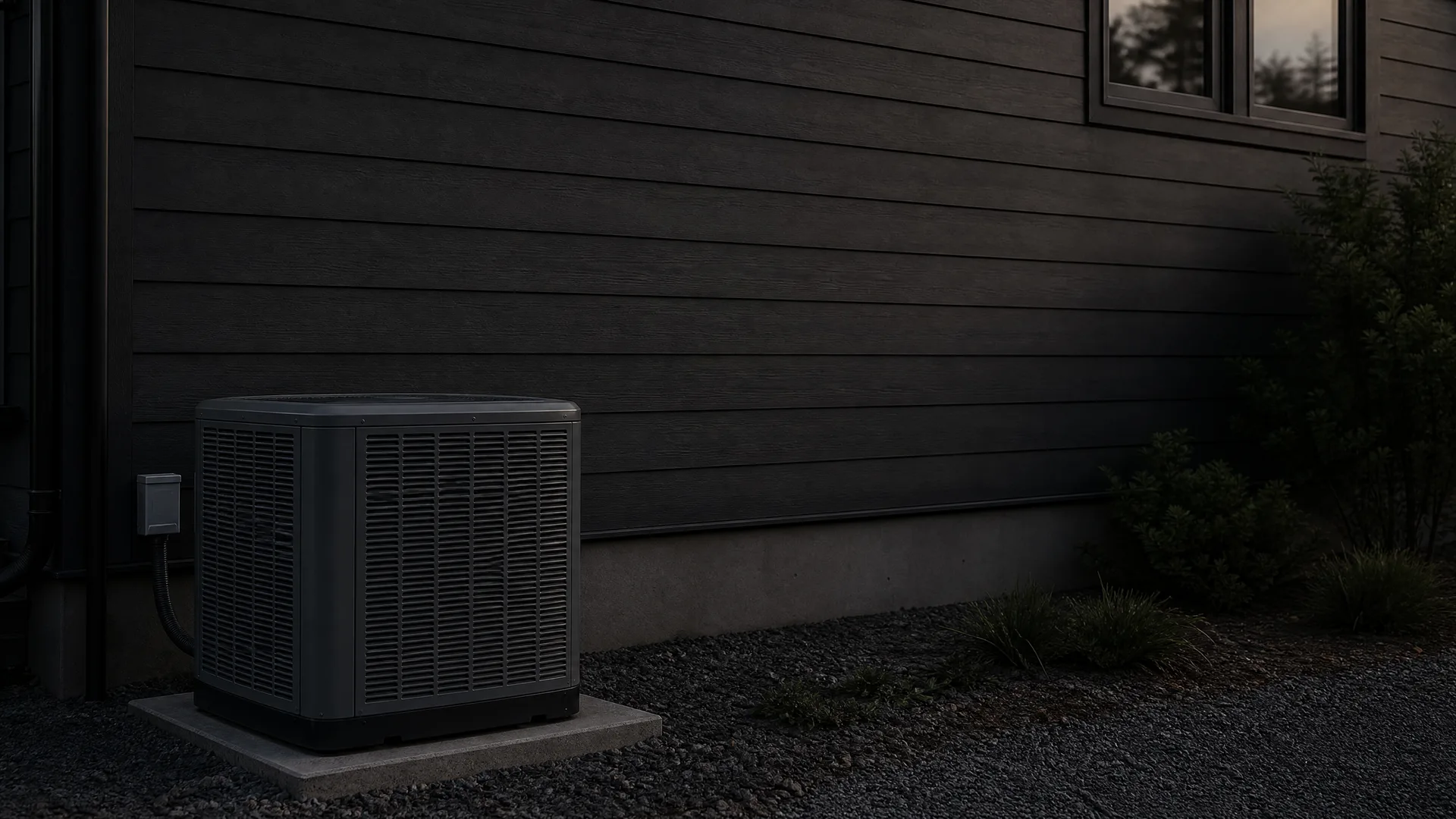
An outdoor condenser unit on a concrete pad beside a dark horizontal-lap-sided house, with gravel, shrubs and a small electrical disconnect box on the wall, in dim light.

Skip the search

Your request goes to one pro, not a list of companies.

Step 1 of 3: Equipment