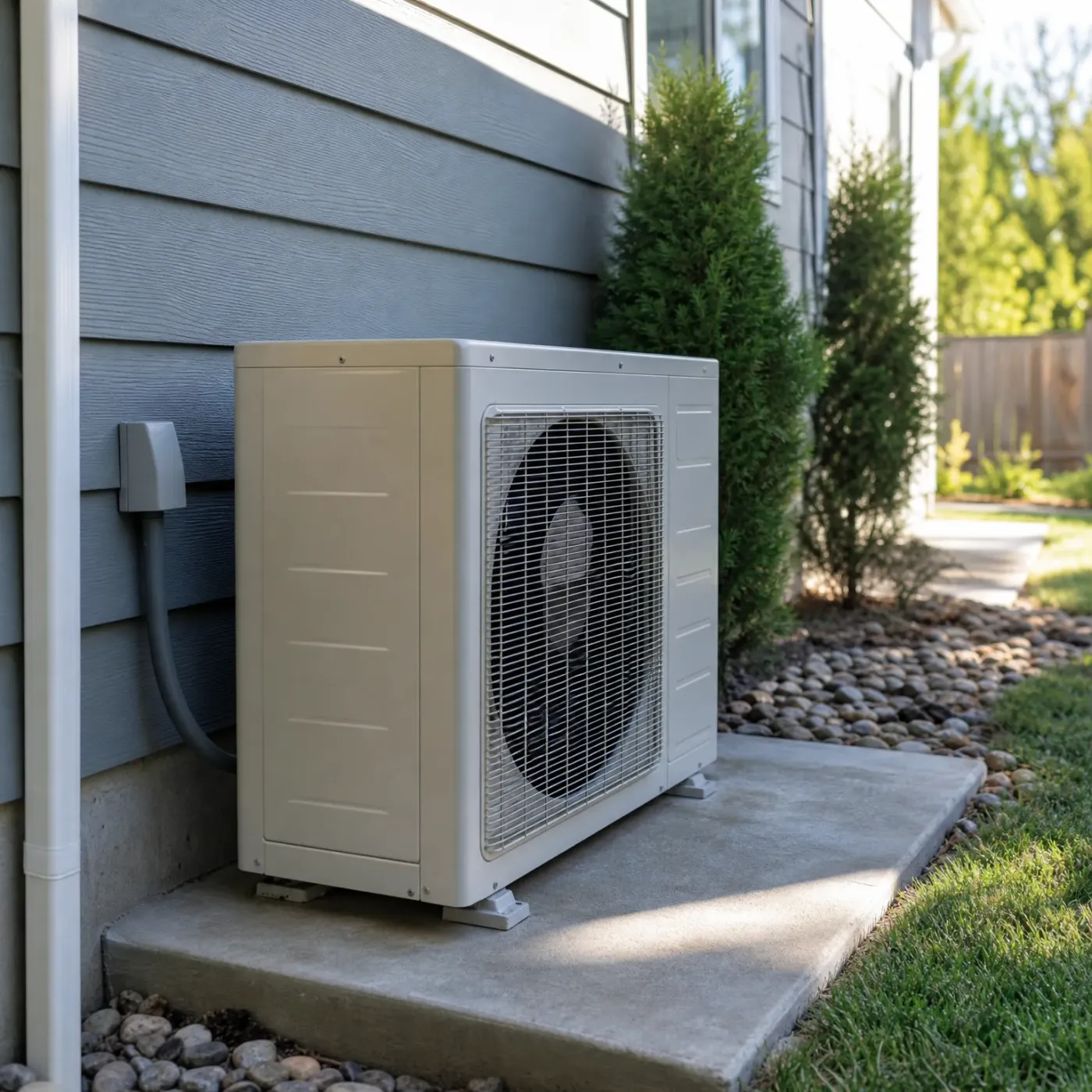
Running long but keeping up
The house holds its temperature and the heat pump cycles down sometimes, even if only for a few minutes. It's working harder than usual, not failing.

A heat pump that runs nonstop in a Maine winter is usually doing what it's supposed to. Below about 20 to 30 degrees, the outdoor unit has to work harder to pull heat out of cold air, so it runs longer stretches instead of cycling on and off. On the coldest days it may run all day and all night and still barely keep up. That's normal operation, not a sign of failure, up to a point. What's not normal is when it runs constantly and the house still feels cold, or you notice ice building up on the outdoor unit that doesn't clear during the defrost cycle. That points to something actually wrong, like a refrigerant leak, a failing defrost control, or a unit that was never sized to handle the coldest nights on its own. If your home leans on the heat pump as its main heat source rather than backup, a unit that's struggling will show it fastest.




A heat pump moves heat from outside air into your house. The colder the air, the less heat is in it to grab, so the system has to run longer to pull out the same amount. That's just how the refrigerant cycle works, in any brand, any size unit. Around 5 to 15 degrees, which Maine sees plenty of, a heat pump can run close to around the clock and still be doing its job. It's not straining to keep up. It's working the way it was designed to, just at the harder end of its range. The defrost cycle adds to this too, since it has to pause and melt frost off the outdoor coil before it can keep pulling heat, which uses more run time.
The difference between normal and broken is whether the house stays warm. If the heat pump runs all day and your rooms hold around 68 to 70 degrees, it's keeping pace with the cold, even if it never shuts off. If it runs nonstop and the house still falls short of the thermostat setting, or the outdoor unit is caked in ice that doesn't clear during defrost, something is off. A low refrigerant charge, a failing defrost sensor, or a compressor losing capacity will all show up this way, as a unit that runs and runs but loses ground instead of holding steady.


The house holds its temperature and the heat pump cycles down sometimes, even if only for a few minutes. It's working harder than usual, not failing.
Indoor temperature keeps dropping, or the system runs flat out for days without a break. That points to something that needs a look, not just cold weather.

If your heat pump is losing ground, you'll feel it first in the rooms farthest from the unit. Those close in. Some households have a backup system, often oil, set to kick in when the heat pump can't keep up, and a heat pump stuck running flat out without lifting the temperature means that backup is carrying more of the load than it should, on top of some of the highest power rates in the country.
A contractor who sees the unit in person can tell you whether it's struggling because something needs fixing or because it's simply outmatched by the cold that day. That's not something to guess at over the phone. Once you send a request, you're matched with a contractor who works on heat pumps like yours, and they'll reach out to you directly. Finding the right person to look at it stops being something you have to sort out yourself.


Summer here isn't the hard season for your heat pump. The dew point averages 59°F across June, July and August, according to NOAA climate data for Maine, and that's low enough that the air rarely feels heavy. Your system isn't fighting humidity the way one in Connecticut or Virginia would, so it doesn't run long stretches just to wring moisture out of the air. The hard work for a Maine heat pump happens in winter, pulling heat out of cold air, not in summer pulling moisture out of it. If you're dealing with nonstop running right now, it's a cold weather problem, not a hangover from how the unit handled July. Once you send the form, you're done hunting for someone to look at it. That part's off your plate.
NASA POWER T2MDEW county cells weighted by homes
A heat pump running nonstop through a Maine winter is hard to ignore, and harder to live with once the rooms start cooling anyway. You can wait it out and watch the oil backup carry more of the load than it should, or you can get someone in to look at the charge, the coils, and the defrost cycle while the cold snap is still going. That's the window when a problem actually shows itself. A tech who sees it running during a stretch at 10 or 15 degrees can tell you whether it's behaving the way a heat pump should at that temperature or whether something's actually wrong. Send the request and that search becomes someone else's job, not yours. You stop checking the thermostat every hour and wondering if it's still losing ground, because a contractor who works on heat pumps in this climate is already on it.
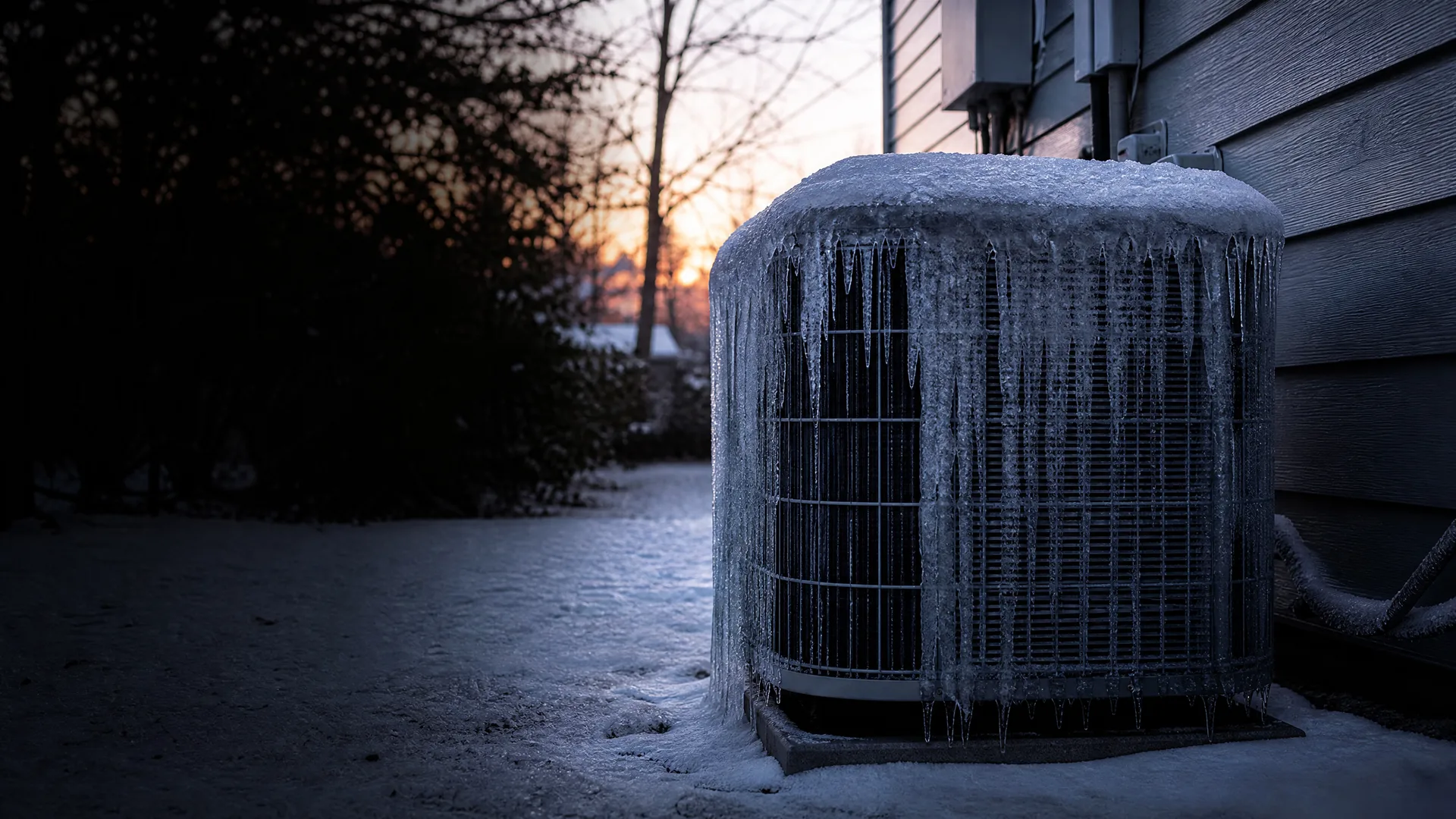
Six in the morning, still dark, and you're the only one up. You pull on boots to check the oil tank gauge and glance toward the side yard out of habit. The outdoor unit is sitting under a crust of ice, thick over the coils, climbing past the fan guard. No steam, no hum of a defrost cycle working through it. Just ice and silence. Inside, the thermostat reads four degrees under where you set it. You stand there a second with your breath showing, then go back in to add a layer to the kids' beds before anyone else is awake to notice the house didn't hold its heat overnight.
At that rate, a heat pump running nonstop costs real money fast, and it's why the oil backup kicking in matters to your bill, not just your comfort. Watching how long it runs each day tells you more than the thermostat number does.
EIA-861 2025 statewide residential average
A heat pump that runs nonstop on a cold night in Maine is doing what it was built to do. Cold air holds less heat, so the system has to work longer to pull out the same amount it would on a mild day. That alone isn't a problem. What matters is whether the house keeps up. If the rooms stay warm and the oil backup isn't carrying more than its share, the long run times are just the system earning its keep.
The signs worth paying attention to are different. Ice climbing past the fan guard on the outdoor unit. Rooms that keep losing ground no matter how long the system runs. An oil backup that's kicking in more often than it used to, quietly picking up load the heat pump should be handling itself. Any of those point to something specific: low refrigerant, a unit that was undersized for the house, or a part that's wearing out. A contractor can tell which one it is, and that's not something you can tell from the thermostat alone.
You don't have to figure out which of those you're looking at before you ask for help. Send the form, and the work of finding someone who can look at the system stops being yours to carry. That's one less thing to track on a morning when you're already out checking the oil gauge in the dark.