

Why your heat pump keeps short cycling in Maine

Send the request today and stop worrying about who to call.

Hand it over

A heat pump that keeps turning off and on in short bursts, instead of running a steady cycle, is usually sized wrong for the house or losing refrigerant. If it's too big for the space, it satisfies the thermostat fast and shuts off before it finishes a full cycle, then kicks back on minutes later. A low refrigerant charge does something similar: the system can't move enough heat to keep up, so it trips off on protection and restarts over and over. Cold weather makes this worse. Maine winters push heat pumps hard, and a unit already struggling to hold its charge or already oversized will short cycle more often when it's working against outdoor temperatures in the teens or lower. A dirty air filter or a failing sensor can cause the same pattern. Left alone, short cycling wears down the compressor faster than normal use would, and it drives up a power bill that's already steep here. It's worth having someone look at it before a small problem becomes a compressor replacement.

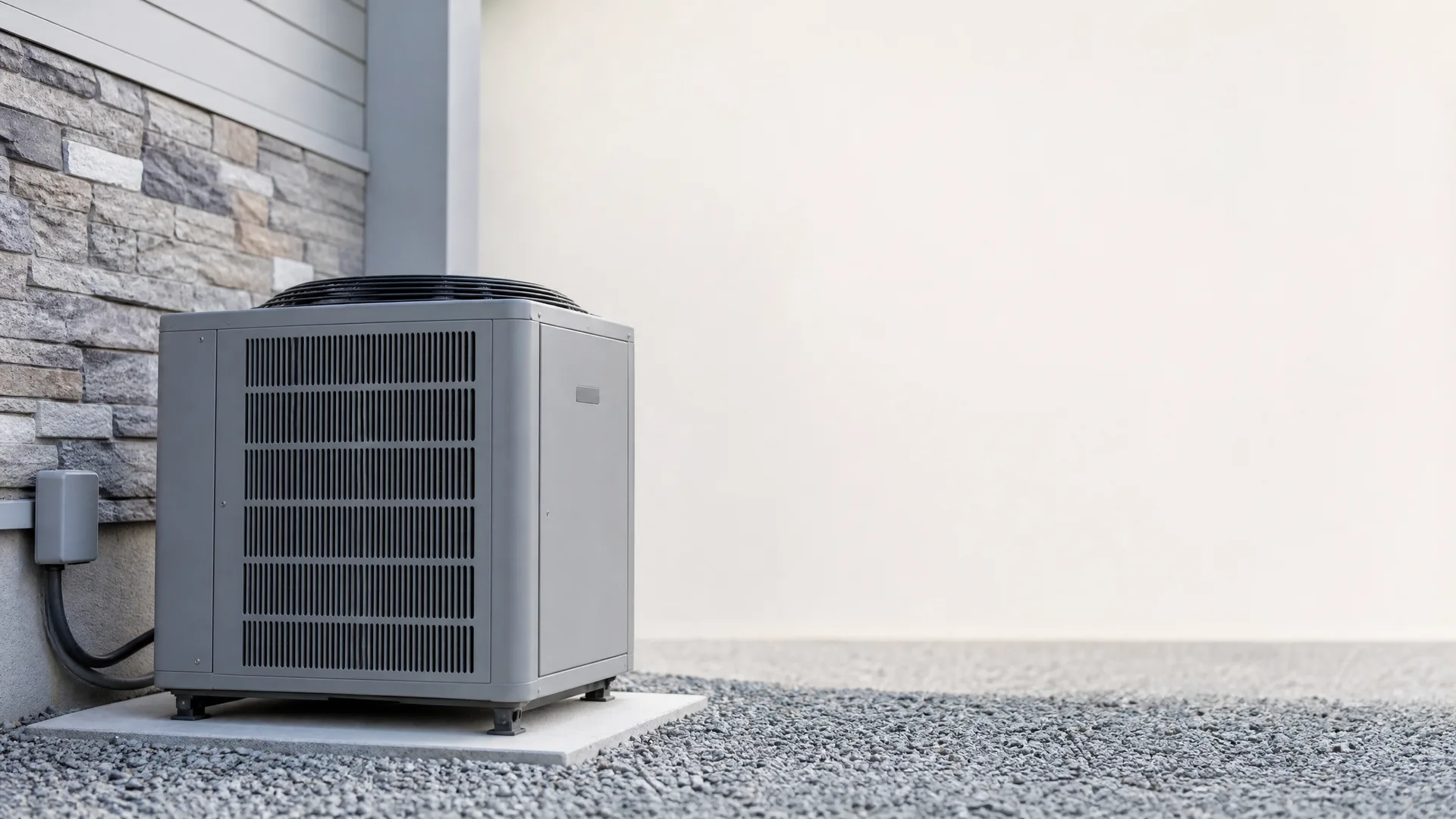
A gray outdoor condenser unit on a concrete pad beside a house with stacked stone and horizontal siding, surrounded by gray gravel and a plain light wall.

Oversizing shows up fastest in shoulder months

A heat pump sized for Maine's coldest January days can be too much for a mild October or April afternoon. It blasts the house up to temperature in a few minutes and shuts off, then starts again fifteen minutes later. That stop-start pattern wears on the compressor more than one long, steady run would, and it's a strain many homes here feel first in spring and fall, before winter even sets in.

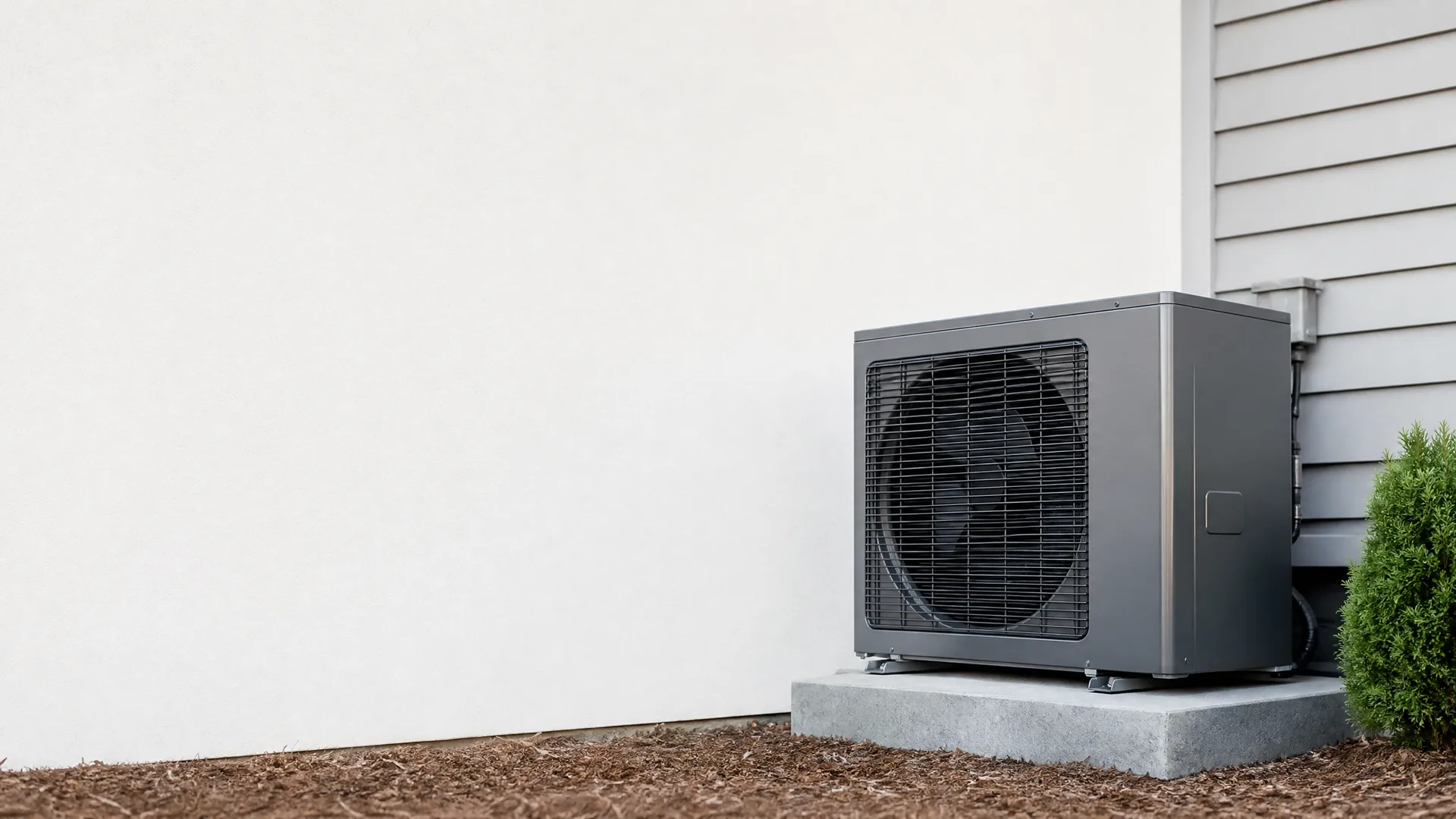
A dark gray outdoor heat pump unit sits on a concrete pad beside a white stucco wall and lap-sided house corner, with mulch and a small shrub in the foreground.

A refrigerant leak forces the same pattern

Low refrigerant means the system can't move enough heat to satisfy the thermostat normally, so it works harder and trips off on protective limits before the cycle finishes. Unlike an oversized unit, this gets worse over time instead of staying constant. A system that ran fine last winter and started short cycling this year is more likely leaking refrigerant than suddenly wrong for the house.

Oversized Unit or Low Charge

Short cycling from oversizing

  • The unit reaches setpoint in a few minutes because it was never matched to the house's actual heat loss, often sized off square footage instead of a load calculation.
  • It shuts off before the blower has run long enough to pull moisture out of the air, so summer rooms feel cool but damp.
  • Mild days in April or October are when this shows up worst, since the system has far more capacity than the house needs at 55 degrees.
  • The compressor restarts every few minutes instead of settling into one long run, and that start-stop pattern wears the contactor and compressor faster than steady running would.
  • A load calculation done right would likely call for a smaller unit, but replacing a correctly installed oversized system is a bigger job than a refrigerant fix.

Short cycling from low refrigerant

  • A system low on refrigerant can't move enough heat per cycle, so it satisfies the thermostat on a short burst of cold or lukewarm air rather than a full heating or cooling run.
  • Refrigerant doesn't get used up. If the charge is low, it's leaking somewhere in the lines, the coil, or a fitting, and the level keeps dropping until that leak is found and closed.
  • Ice forming on the outdoor unit or the indoor coil during a run is a sign the charge is off, not a sign the unit needs defrosting more often.
  • This gets worse over weeks or months as the leak continues, so a system that cycled fine in September can be short cycling badly by December.
  • A low charge is a repair: find the leak, seal it, and recharge to the number on the unit's nameplate, not a swap of the whole system.
A beige outdoor air conditioning condenser unit on a concrete pad beside a house with horizontal vinyl siding, with refrigerant lines and a disconnect box on the wall, surrounded by dark mulch and a green shrub at left.

Running a normal cycle

This is what a right-sized system looks like at rest between cycles. It ran long enough to pull the house down to setpoint evenly, then shut off clean. The conduit and disconnect are doing nothing unusual, because the unit isn't working harder than the load calls for.


An outdoor air conditioner condenser unit on a concrete pad beside a house with horizontal lap siding, with a shrub to the left, bare dirt in front, and conduit and a metal disconnect box on the wall.

Starting and stopping on its own

Here the unit is firing up every few minutes instead of settling into one run. That pattern wears the compressor down faster than steady use would, and in a Maine winter it means the house never quite holds its temperature between bursts.

What are you noticing with your own heat pump

You might be hearing the outdoor unit kick on, run for a few minutes, then quiet down, then start again before you've even left the room. Indoors the air feels cooler or warmer than it should for how long the thing ran. Some rooms catch up fast while others stay off. Your electric bill climbs even though the unit never seems to run long. If you still heat with oil and use the heat pump for shoulder months or backup, this pattern wears on the compressor faster than a normal cycle would, and with power rates what they are in Maine, a unit working this hard to do this little adds up fast.

A smiling man in a blue denim shirt over a white tee sits at a light stone kitchen counter with a grey mug and a bowl of oranges and bananas, with pendant lights and shelving behind him.
A smiling bearded man in a grey long-sleeved shirt sits at a kitchen counter with a dark mug, with a dining table, pendant light and glass doors onto greenery behind him.
A bearded man in a dark green knit sweater smiles and looks off to the side while standing at a kitchen counter with a white mug of coffee, with open shelving, a potted tree, and a dining table near large windows behind him.
A man with dark curly hair in a dark green sweater stands smiling and looking to the side in a kitchen with white cabinets, a potted plant, a stone countertop with a ceramic mug, and a dining area with framed art in the background.

One request and it's handed off

Describe what your heat pump is doing once, in one form.

You're not committing to anything by asking.

You leave it alone because it's still heating the house, and the breaker hasn't tripped, and nothing smells wrong. It's just cycling faster than it used to.

A compressor that starts and stops short wears out faster than one that runs a full cycle, and each short start pulls hard on the electrical system feeding it. Left alone, it gets to a repair that costs more than it would have.

An outdoor air conditioning condenser unit on a concrete pad beside a house with horizontal siding above a brick foundation, with a flexible conduit running to a wall-mounted disconnect box.
Before you get your heat pump repair
An outdoor condenser unit on a concrete pad beside a gray lap-sided house, with an electrical disconnect box and conduit on the wall and shrubs with mulch to the right.
After you get your heat pump repair

A heat pump is supposed to ramp the compressor up slowly when it starts a cycle, not jump straight to full speed. When something is wrong, that cycle gets cut short before it ever finishes. Low refrigerant charge is a common reason. The system hits a pressure limit early, and the control board shuts the compressor down rather than let it keep running against the wrong pressure. The outdoor unit's defrost board and the indoor air handler's board are both watching how long each cycle runs, and either one will call a stop if it sees a fault, even if the fault is minor. A weak start capacitor causes a different kind of short cycle. The compressor struggles to get going, pulls more current than it should, and trips its own overload protection within a minute or two. Restricted or undercharged refrigerant lines throw off the pressure readings at the reversing valve, which can end a cycle well before the house gets anywhere near setpoint. A dirty outdoor coil does something similar by blocking airflow, which drives head pressure up until the high pressure switch cuts the compressor off early.

What's actually happening inside the unit

  • A heat pump starts a call for heat or cooling by ramping the compressor speed up gradually, not snapping straight to full output.
  • Low refrigerant charge makes the system reach pressure limits early, so the control board cuts the compressor before the cycle finishes.
  • The outdoor unit's defrost board and the indoor air handler's control board both watch run time, and either one can call a short cycle if it sees a fault.
  • A failing start capacitor can let the compressor struggle on startup, draw high amps, and trip its internal overload within a minute or two.
  • Refrigerant lines that are undercharged or restricted change the pressure readings at the reversing valve, which can shut the unit down well before the house reaches setpoint.
  • A dirty outdoor coil blocks airflow across the refrigerant lines, driving head pressure up until the high pressure switch kills the cycle early.
A smiling man in a dark blue T-shirt sits on a light gray sofa in a living room with a wooden shelf and window behind him, with a laptop edge visible in the foreground.
A bearded man in a plaid flannel shirt stands indoors looking out a frost-covered window, with a steaming dark blue mug on the wooden sill and snow-covered trees outside.

Power costs 27.69 cents per kilowatt-hour statewide

At 27.69 cents per kilowatt-hour, your heat pump is already one of the pricier things running in your house. Short cycling makes that worse, since the compressor draws its highest power right at startup, over and over, instead of settling into one steady run.

EIA-861 2025 statewide residential average

A closed silver laptop and a glazed ceramic mug on a wooden table, with a blurred kitchen counter, potted plant, cutting board and window in the background.

Short cycling doesn't fix itself

A heat pump that keeps shutting off and starting back up is either too big for your house or low on refrigerant. Either way, something has to be measured and corrected. It won't settle into a normal cycle on its own, and the longer it runs this way, the more it costs you on a power bill that's already steep and the harder it is on a compressor that wasn't built to start and stop this often.

You don't have to spend an evening searching for a heat pump contractor in Maine, calling a few, and telling each one the same story about what the outdoor unit is doing before you even get a quote. Send the form once and the search is done. You'll know who's coming, and you can stop listening for that next startup.

Interior corner of a dining room with a round wooden table, a ceramic vase holding olive branches, a dark spindle-back chair near a curtained window, and a sideboard with a lamp against beige walls.
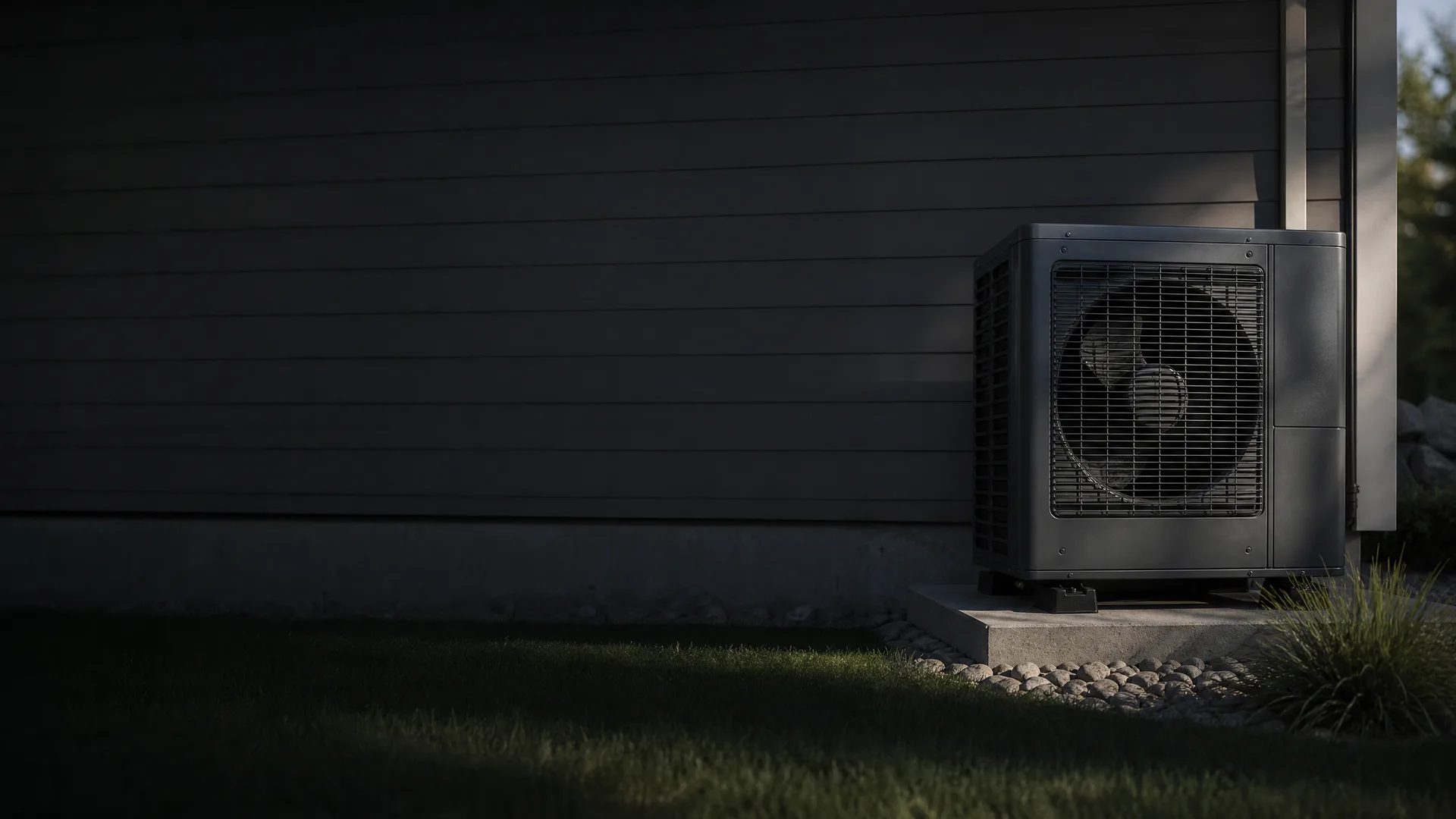
An outdoor air-source heat pump unit with a large fan grille stands on a concrete pad beside a dark horizontal-slat clad house wall, bordered by gravel, grass and an ornamental grass clump.

Done looking for a heat pump pro

Answer a few questions instead of calling shop after shop.

Step 1 of 3: Equipment