A gray outdoor heat pump unit on a concrete pad beside a dark horizontal-siding wall, with a small electrical box on the wall, shrubs and a concrete walkway to the right at dusk.

One request and it's handed off

What size heat pump a Maine home needs

Sizing a heat pump for a Maine home means weighing your square footage against a Maine winter, not a mild one, since most of these systems lean on backup heat once it gets cold enough. This page walks through what goes into that number. Send the form and the search for the right installer is off your plate.

Let a pro reach out

There's no single tonnage that fits every house here. The number comes from your square footage, your insulation, your windows, and how cold it gets on the coldest night your town actually sees, not just the average. Maine winters push well below zero in places, and a heat pump sized only for a mild day will struggle right when you need it most. Go too small and the system runs constantly without keeping up on the hardest days. Go too big and it short cycles, wearing out parts faster and leaving the air clammy instead of even. Because so many homes here heat with oil, a lot of heat pumps get installed as a second system working alongside the furnace rather than replacing it outright, which changes the sizing math again. Getting this number right takes a load calculation done at the house, room by room, not a guess based on square footage alone.

A gray outdoor heat pump unit on a concrete pad beside a house with horizontal lap siding, with a conduit running to a wall-mounted disconnect box and a green shrub to the left.

Sized right

A unit sized to your house and your coldest night runs steady without straining. It cycles on, keeps up, and shuts off clean, no struggling to catch up on a January morning. The clearance around it stays open, the pad stays level, and the lines run straight into the wall.

An outdoor air conditioning condenser unit with dusty coils sits on a concrete pad against light horizontal siding, with an electrical disconnect box and refrigerant lines on the wall and a shrub and mulch at left.

Sized wrong

A unit too big or too small short cycles or runs constantly, and either way it wears faster than it should. Grime builds up around a coil that never gets a break. Backup heat kicks in more than it needs to, and on Maine power rates that shows up on the bill fast.

Heat Pump Alone or With Oil Backup

Heat pump alone

  • On a night that drops to ten below, a heat pump sized for mild days falls behind and the house loses ground before morning.
  • A unit leaning hard on its own compressor at that cold draws more power to make less heat, and Maine's rates make that an expensive way to stay warm.
  • Without backup, the only way to cover the coldest night is to oversize the heat pump for the other 350 days of the year, which costs more up front and cycles poorly in October and May.
  • Some heat pumps lose real capacity as the outdoor temperature drops, so the number on the box at 47 degrees isn't the number you get at zero.

Heat pump with oil backup

  • The heat pump is sized for most of the winter, and the oil system picks up only on the nights cold enough to need it.
  • Since most homes here already heat with oil, the furnace or boiler is already in place and doesn't need to be sized from scratch.
  • The heat pump can be sized closer to the house's everyday load instead of its worst night, which keeps it running efficiently the rest of the year.
  • A contractor who sets the switchover point correctly keeps the oil system from kicking in too early or too late, so each one carries the load it's actually suited for.
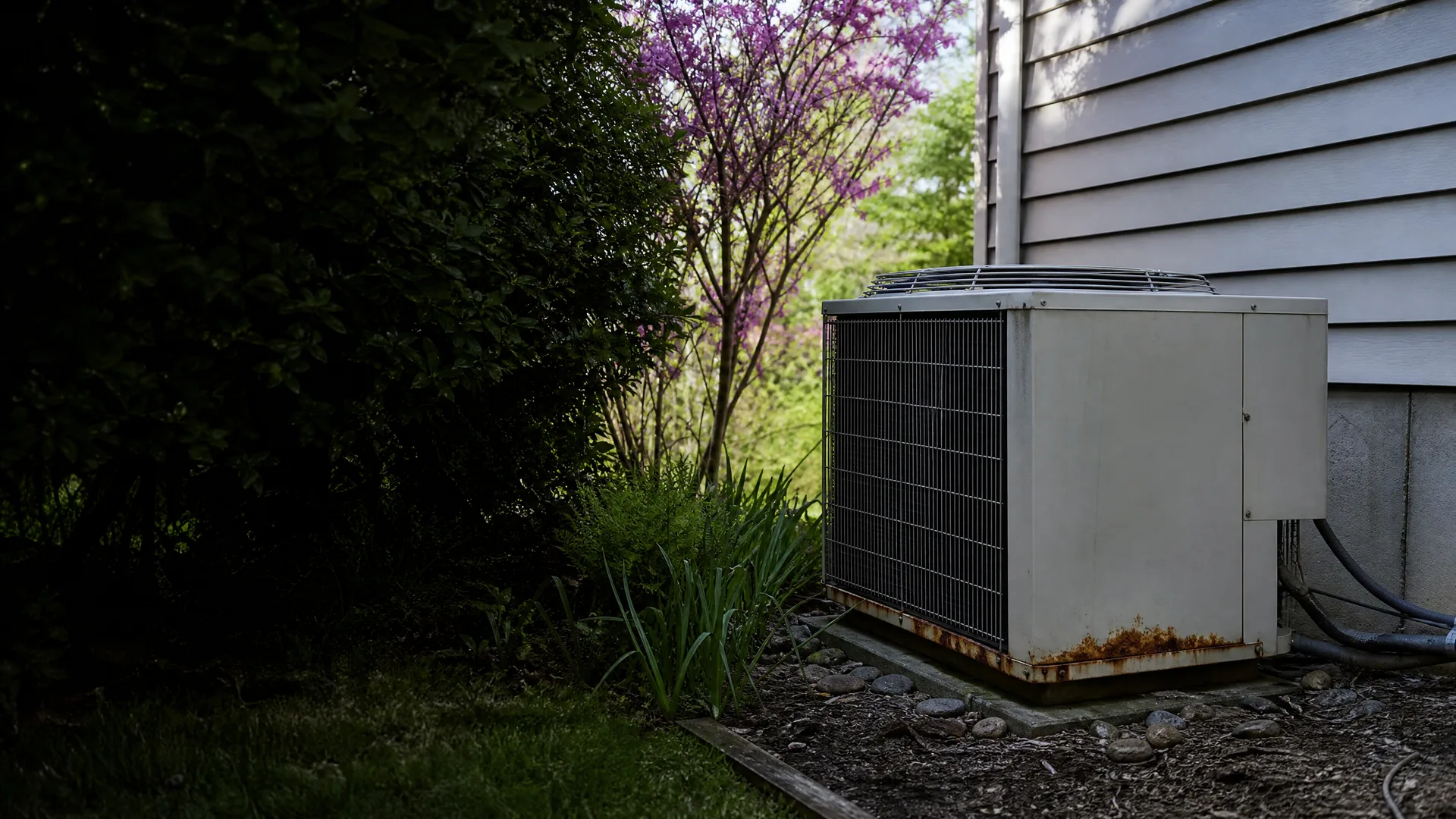
An outdoor air conditioning condenser unit with rust streaks sits on a concrete pad beside a light-colored lap-sided house, surrounded by shrubs, gravel and a flowering tree.

You're out raking the last of the leaf litter the snow pack flattened against the house, and the outdoor unit sitting in the side yard finally comes into full view. It made it through winter, but you can see what that cost it. Rust has crept along the base where meltwater sat against the metal all those cold months. The fan turns when you flip the thermostat inside, but it sounds louder than it did last spring, a kind of strain in the motor that wasn't there before. You crouch down and run a finger along the rusted seam, wondering how many more Maine winters this one has in it before it just stops turning one morning in January.


Done looking for a heat pump pro

One installer gets your project, so there's no bidding war over it.

There's no charge for the request.

What the cold climate rating tells you

Every heat pump sold for Maine homes carries a cold climate rating, a measurement of how much heat it can still pull from the outside air at low temperatures. That number comes from testing, not a guess, and it's the figure a contractor checks against your town's coldest night before choosing a model. Two units with the same tonnage can perform very differently once the air outside drops into the single digits. A unit with a strong cold climate rating keeps producing heat well below zero, while a cheaper model built for milder states starts losing ground long before the thermometer gets there. This is the number that separates a heat pump that carries your house through January from one that hands the load to backup heat by Thanksgiving.

Why oil heat changes the math

Most Maine homes still heat with oil, and that changes how a contractor sizes a heat pump for yours. Where a heat pump is the only heat source, it has to be sized for the coldest night your town sees, full stop. Where oil stays in place as backup, the heat pump can be sized closer to the shoulder seasons and most of the winter, letting the furnace or boiler pick up the hardest nights. Both are legitimate ways to size a system, but they lead to different tonnage and different equipment. A contractor who knows your fuel setup sizes around it instead of assuming the heat pump is carrying the whole house alone.

An outdoor air conditioning condenser unit on a concrete pad beside a house with horizontal lap siding, with a green shrub to the left and a wide concrete slab in the foreground.
Before you get your heat pump installation
A gray outdoor condenser unit on a concrete pad beside a house with horizontal lap siding, with a wall-mounted disconnect box, conduit and insulated refrigerant lines, a shrub at left and gravel at right.
After you get your heat pump installation
A gray outdoor condenser unit sits on a concrete pad against a house wall with horizontal siding above a stone veneer base, with an electrical disconnect box and conduit on the wall and a leafy shrub in mulch to the left.

Clear coil, clear path

The fins on this unit are open and the air moves through them the way they were designed to. A unit installed with room to breathe on all sides keeps pulling heat out of the Maine air through the worst of winter, down to the temperature it was sized for.

An outdoor air conditioner condenser unit on a concrete pad beside a house with beige vinyl siding, with a gray electrical disconnect box and insulated refrigerant lines on the wall and river rock to the right.

Clogged coil, losing ground

Dirt and debris have packed into these fins, and the unit has to work harder to pull the same heat out of the air. Sizing accounts for the coldest night your town sees, but a coil this fouled falls short of that number long before the thermometer gets there.

A man with grey hair and stubble in a dark sweater sits on a grey sofa indoors, looking off to the side, with a potted plant and a sunlit window behind him.
A man with gray hair, a beard and glasses, wearing a dark green sweater, sits on a gray sofa in a sunlit living room with a potted plant, table lamp and wooden sideboard behind him.
A middle-aged man with graying hair and a short beard sits on a blue sofa in a living room, looking toward a window, with a bookshelf, lamp and framed picture in the background.
A man with graying curly hair and a dark green sweater sits on a gray sofa in a sunlit living room, looking off to the side, with a framed picture, shelving, an armchair and a window with sheer curtains behind him.
A single-story house with gray vinyl siding, dark shingled gable roofs, and white-trimmed windows, set behind a partly dry green lawn under a clear blue sky.

Summer here isn't the problem your heat pump has to answer for. Averaged across Maine homes, the dew point sits at 59°F for June, July and August, which is mild as these things go. Your system won't run long or hard to pull that moisture out of the air, and the compressor won't be straining on the cooling side the way a unit in a muggier state would. That matters for sizing, because a heat pump picked to handle a tough summer here would end up bigger than you need, cycling on and off more than it should, and costing more to run without buying you anything. The number that should drive your sizing is what happens on your coldest night, not your mildest August afternoon.

NASA POWER T2MDEW county cells weighted by homes

A gray outdoor condenser unit sits on a concrete pad beside a house with horizontal lap siding, with a wall-mounted disconnect box and refrigerant lines, mulched beds and a shrub nearby, and a concrete walkway in the foreground.
Clearance kept on all sides lets the unit draw a full breath of winter air through the coil.
An outdoor air conditioner condenser unit on a concrete pad beside a light gray vinyl-sided house, with an electrical disconnect box and conduit on the wall and bare soil in the foreground.
Mulch and shrubs crowded against the cabinet choke the airflow a cold night already makes it work hard for.
A woman with shoulder-length brown hair wearing a beige knit cardigan sits in a gray upholstered armchair near a window, looking off to the side with a slight smile, with bookshelves blurred in the background.
A woman and a sleeping child wrapped together in a cream knitted blanket on a couch, with a potted plant, framed photo and lit lamp in the background.

Getting the size right

  • The right size comes from your square footage, your insulation, and the coldest night your town actually sees.
  • A unit sized this way runs steady through a Maine winter instead of falling behind when the temperature drops well below zero.
  • A local installer who works on these systems every winter knows which brands and sizes hold up on the coldest nights around here.
  • You get matched with one licensed contractor for your area, so you're not fielding calls from several companies at once.
  • Sizing it right the first time means fewer surprises on your power bill once the coldest months arrive.

There's no shortcut that replaces a proper look at your house. The right size comes out of your square footage, how well the place is insulated, and the coldest night your town sees in a hard winter, not a mild one. Get that number right and the unit you end up with keeps pace all winter instead of losing ground on the nights that matter.

That calculation is easier in the hands of someone who does it for a living around here. A local installer who services these systems every winter has seen which brands keep delivering heat when it's well below zero and which ones start to struggle. That's not something you can get from a brochure. It comes from being the one who gets the call when a unit falls behind on a cold morning, and from knowing, before the quote is written, what size and setup actually hold up on your street.

Sending the form connects you with one licensed contractor local to your part of Maine, not a handful of companies competing for your callback. That means one conversation about your house, your oil furnace as backup if you've got one, and what the coldest nights near you actually demand, instead of sorting through several strangers making the same pitch.

Oil has been the default heat here for a long time, and electricity costs more here than in most states, so the sizing matters twice over: too small and the backup heat carries more of the winter than it should, too big and the unit short-cycles without ever settling in. Done right, the sizing holds and the bill reflects a system that was matched to your house from the start.

An outdoor heat pump unit with a large circular fan sits on a concrete pad beside a dark horizontal-sided building, with gravel ground and green shrubs at right.

It's off your list after this

Only one pro gets your request, so you hear from one company.

Step 1 of 3: Equipment