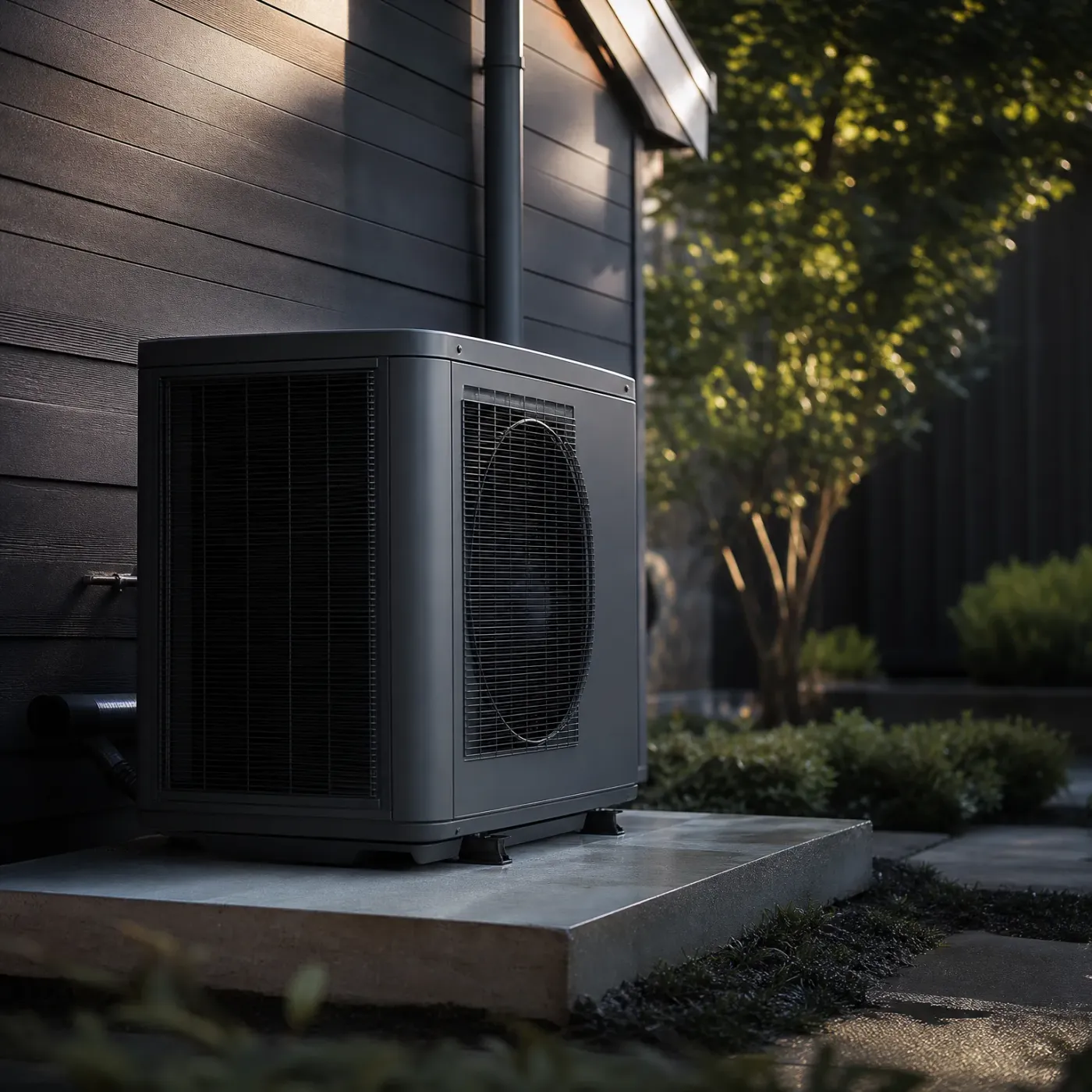






A gray outdoor condenser/heat pump unit with a side fan grille sits on a concrete pad beside a dark horizontal wood-sided house, with shrubs and a small tree nearby.

Explain it one time

What defrost mode means on a Maine heat pump

Your heat pump's outdoor unit stops heating for a few minutes and the fan may even run in reverse, sometimes with steam rising off it. That's defrost mode, and this page gets into why it happens and when it points to a real problem. If it's running longer than it should or the heat isn't coming back on after, skip the search for a contractor, the calls, and repeating yourself. One licensed Maine tech who works on heat pumps all winter takes it from here.

Describe it once

Defrost mode is your heat pump melting the ice off its outdoor coil. In a Maine winter, moisture in the air freezes onto that coil as the unit pulls heat out of the cold air, and if the frost builds up it blocks airflow and the system can't work. So the heat pump reverses itself for a few minutes, sends warm refrigerant out to the coil instead of inside, and lets the ice melt and drip off. The fan may slow or stop, you might see steam, and your house gets no heat from it during that stretch. This is normal. It should happen every hour or so when it's cold out, run for maybe five to fifteen minutes, then switch back to heating on its own. What's not normal is a unit that defrosts constantly, stays in it longer than that, or comes out of it still coated in ice. That points to something wrong, a low refrigerant charge, a failed sensor, a fan that isn't moving air the way it should.

A gray outdoor condenser unit on a concrete pad beside a light-green sided house, surrounded by mulch, ornamental grasses and a shrub, with mowed lawn in the foreground.
Frost coats the coil evenly, the unit runs its defrost cycle for a few minutes, then goes right back to heating.
A gray outdoor air conditioning condenser unit on a concrete pad beside a house with light vinyl siding, with a gray electrical disconnect box and conduit on the wall to the right.
Ice has built up thick on the fins and stayed there, a sign the defrost cycle isn't clearing it anymore.

A sensor on or near the outdoor coil watches its temperature, and on some systems a timer tracks how long the unit has been running cold. Once both say the coil has frosted enough to matter, the control board flips the reversing valve. That sends hot refrigerant out to the coil instead of into your house, so the unit is briefly running like an air conditioner to melt the ice off itself. Your indoor fan usually shuts off during this, or a backup heat strip kicks on, so you aren't left feeling a blast of cold air through the vents. The coil sensor keeps reading the temperature through the cycle, and once it climbs back to the set point, the board switches the valve again and the system goes back to heating your home. The parts that can fail here are specific: a defrost sensor that reads wrong, or a reversing valve that sticks. Either one can leave the coil frosted for hours while the unit keeps trying to heat, or leave it stuck running backward and blowing cold air long after the ice is gone.

What Happens Inside Defrost Mode

  • A sensor on the outdoor coil or a thermistor on the line reads coil temperature and tells the control board when frost has built up enough to matter.
  • Some systems pair that with a timer, so defrost only kicks in after the unit has run a set stretch of minutes at a low coil temperature.
  • The reversing valve flips so the system runs backward, sending hot refrigerant out to the coil to melt the ice instead of into your house.
  • Because the unit is in cooling mode for those few minutes, the indoor fan usually shuts off or a backup heat strip kicks in so you don't feel cold air.
  • Once the coil sensor reads a set warmer temperature, the board switches the valve back and the unit returns to heating your home.
  • A bad defrost sensor or a stuck reversing valve can leave the unit heating with a frosted coil for hours, or stuck in defrost and blowing cold air.
A smiling woman with long dark hair in a gray sweater sits at a white stone counter with a glass of white wine, with a kitchen, fireplace and sofa visible behind her.
A smiling woman with dark hair in a cream sweater sits at a marble table with a glass of red wine, with a lit lamp, sofa, fireplace and kitchen counter behind her.
A woman in a cream sweater laughs while seated at a marble countertop with a glass of red wine, with a dimly lit living room and sofa behind her.
A woman in a beige turtleneck sweater with her hair up sits laughing and looking to the side at a white marble table with a glass of red wine, in a dimly lit interior with a lamp and seating area behind her.

Why it runs the fan backward

During defrost, the system reverses and sends hot refrigerant out to the coil instead of into your house. That's what melts the ice, and it's also why the outdoor fan can seem to spin the wrong way and steam comes off the unit. For a few minutes, no warm air comes through your vents, because the heat is going outside to clear the coil, not inside to your rooms. Once the coil's clear, it switches back and the warm air returns. That short gap is normal and not a sign anything's wrong.


Why Maine winters trigger it more

Defrost cycles happen more in damp cold than in dry cold, because wet air near freezing puts more moisture on the coil for the unit to deal with. Along the Maine coast, where winter air carries more moisture than it does inland, you'll likely see defrost mode kick in more often than someone running the same heat pump further north. The cycle itself isn't the problem. A unit built for this climate is sized to handle frequent defrost without it costing you much in comfort or in the power it draws doing it.

An outdoor air conditioner condenser unit on a concrete pad beside a house with beige horizontal siding, with conduit running from an electrical box on the wall.
Before you get your heat pump repair
A gray outdoor heat pump unit on a concrete pad beside a house with horizontal lap siding, connected by conduit and a flexible line to a wall-mounted disconnect box, with low shrubs and mulch nearby.
After you get your heat pump repair

Skip the calls to every shop

A heat pump that's stuck defrosting, or won't come out of it, is working against a Maine winter it can't win on its own. With power costs here among the highest in the country, a unit running a bad defrost cycle is burning electricity to melt ice it can't clear, and the backup heat may be kicking in more than it should to cover for it. That's money going out while the problem sits there. Chasing that down yourself means searching for a contractor who actually works on heat pumps rather than oil systems, which is what most homes around you still use, then calling around, explaining the ice and the fan noise more than once, and weighing quotes against each other. Ask here instead and the request goes to one contractor local to you, someone who services this equipment through the coldest months and has seen what usually causes a defrost cycle to run too long or not at all. You deal with the frost once, with someone who already knows what it usually is.

What a bad defrost cycle costs you

A heat pump stuck in defrost too often isn't heating your house for those stretches, so it leans on backup heat or just falls behind, and either way your rooms run colder than the thermostat says. With oil as the main heat source in most Maine homes, a heat pump pulling this kind of slack can mean more oil burned to make up the difference. And since Maine power costs sit among the highest in the country, every extra minute the unit spends melting ice instead of warming your house is electricity spent on a problem, not on comfort.

What happens if it keeps icing up

Thick ice that doesn't clear means the outdoor coil can't pull heat from the air the way it's built to, so the compressor works harder for less output. Left alone through a winter, that strain can wear down parts that would otherwise last. You might notice the unit running almost constantly, the outdoor fan laboring under visible ice even after a defrost cycle should have cleared it, or the house never quite reaching temperature on the coldest evenings. None of that fixes itself once the frost gets ahead of the system.

Power costs 27.69 cents per kilowatt-hour statewide

At 27.69 cents a kilowatt-hour, every extra minute your heat pump spends stuck in defrost is a minute it's pulling power and not warming your rooms. A unit that defrosts too often or too long runs up your bill fast, since it's using electricity to melt ice instead of heat your house.

EIA-861 2025 statewide residential average

A gray outdoor heat pump unit on a concrete pad beside a house with horizontal lap siding, with a conduit running to a wall-mounted disconnect box and a green shrub to the left.

Running a normal cycle

The coil is clean, the fins are clear, and the disconnect box and wiring look undisturbed. A unit set up like this goes into defrost for a few minutes a handful of times a day at most, clears the frost, and goes back to heating your house.

An outdoor air conditioner condenser unit on a concrete pad beside a house with horizontal vinyl siding, with refrigerant lines and an electrical disconnect box on the wall and dry leaves on the ground.

Running into trouble

Dirty coil fins and dead leaves piled against the base choke off airflow before frost ever forms. A coil that starts out this fouled can't shed ice the way it should, so defrost mode runs longer and more often, and your house falls behind on heat while it does.

How does the heat pump know when to start defrosting?

You've probably noticed the outdoor unit isn't just running on a timer. Some nights it kicks into defrost after twenty minutes, other nights it goes an hour or more before it cycles. You want to know what's actually triggering it, not just that it happens. Knowing that also tells you what to listen for if the system starts acting off.

A coil sensor and a timer work together to trigger it

The control board isn't guessing. It's reading the coil temperature from that sensor, and once the coil drops cold enough to mean frost is forming, the board starts counting. Most systems also won't let defrost fire too often, so there's usually a minimum run time built in, often around 30 to 90 minutes, before the board will even consider it. When both conditions line up, cold coil and enough run time passed, it switches over. If a unit defrosts on a schedule no matter how cold it is outside, or skips it entirely during a hard freeze, that sensor or the board reading it is worth having a contractor check.

A single-story house with light gray horizontal siding, dark gray shingled gables, black shutters and a dark front door, fronted by a mulched bed of small shrubs and a large lawn under a clear blue sky.

Summer here isn't the heavy, soupy air you'd get further south. The dew point averages 59°F across June, July and August, measured over where people actually live in Maine. For your heat pump, that's a mild season for moisture. Less water vapor in the air means less work for the coil when it's in cooling mode, and less strain overall compared to what a muggier climate would put on the same unit. Defrost mode is a winter problem, driven by cold air and frost on the outdoor coil, not summer humidity. But a system that isn't fighting heavy air all summer goes into winter in better shape, with less wear built up before the frost season even starts.

NASA POWER T2MDEW county cells weighted by homes

A wooden table in the foreground holds a closed laptop and a ceramic mug of coffee, with a spindle-back wooden chair behind it, a beige wall with paneled wainscoting, a window at left, and a kitchen counter with a cutting board, bowl of fruit and greenery at right.

Defrost mode is normal. A unit stuck in it isn't.

A few minutes of defrost here and there, the fan sounding odd, steam coming off the coil: that's your heat pump doing what it's built to do in a Maine winter. The trouble starts when the cycle runs long, runs often, or doesn't clear the ice at all. That's not weather anymore. That's a sensor, a reversing valve, or a board that isn't doing its job.

Once you can tell the two apart, you don't need to keep watching the outdoor unit wondering if tonight's the night to worry. You also don't need to spend an evening calling around, telling each company the same story about what the fan's been doing, then sitting on quotes trying to work out who actually knows heat pumps versus who's guessing. A local contractor who services this equipment all winter has seen what fails first and can tell you straight whether it's a sensor, a valve, or something simpler.

A dark ceramic mug on a round wooden table beside a light grey sofa with a woven cushion and knit throw, with a window, potted plant, floor lamp and wooden cabinet blurred in the background.
A smiling bearded man in a navy crewneck sweater sits at a dinner table with a glass of red wine, plates and glasses in the foreground, in a dimly lit room with a lamp and framed picture behind him.
A woman in a dark gray sweater reclines on a light sofa with eyes closed and a slight smile, under a textured gray blanket with an open book resting on her lap, with a lit table lamp and plant in the background.

Heat Pump Repair

Skip calling around

Only one pro gets your request, so you hear from one company.

A black-framed smartphone standing upright against a plain light gray background, its screen filled with solid green.
Step 1 of 3: Equipment