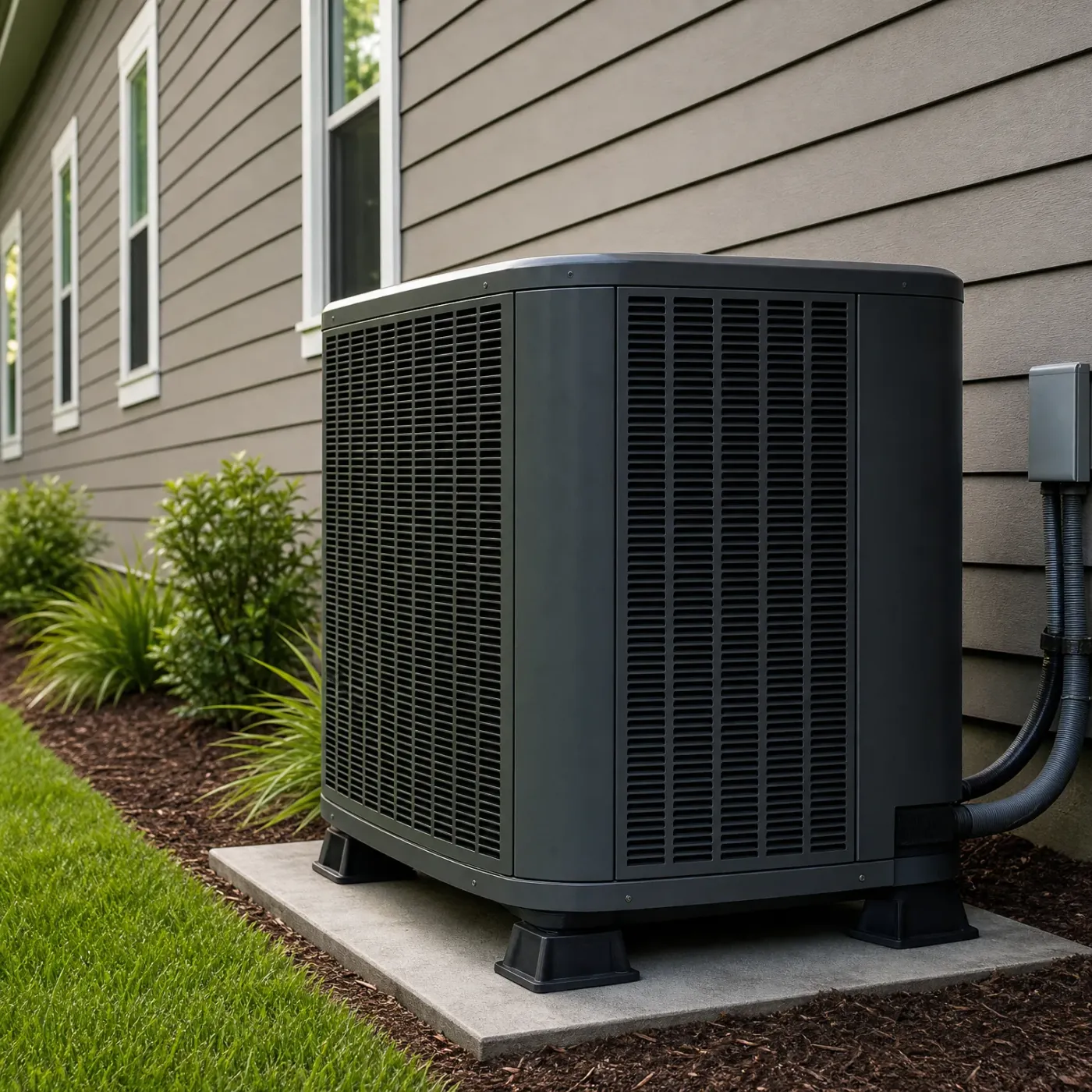
What Actually Gets Checked
- A tune-up checks refrigerant charge against the manufacturer's spec using gauges, not a guess based on how the house feels.
- The reversing valve gets tested in both directions, since that's the part that lets the same unit heat in January and cool in July.
- A technician checks line set insulation, since a bare or crushed section loses heat before it reaches the air handler.
- Electrical connections at the outdoor disconnect get tightened, because a loose connection there is a common reason units trip offline in cold weather.
- The indoor coil and blower wheel get inspected for buildup, since restricted airflow there makes the compressor work harder for the same heat.
- Condensate drainage gets checked on the indoor side so water has somewhere to go during defrost cycles and summer cooling alike.
A heat pump works because the reversing valve can send refrigerant either direction through the lines. Heat the house in January, cool it in July, same unit, same coil, just flowing the other way. If that valve sticks, the system can get stuck in one mode, and that usually shows up at the worst possible time, like a cold snap in February when the house won't come up to temperature. A technician tests it both ways rather than assuming it switched fine last time.
Refrigerant charge matters more here than people expect, because a heat pump pulling warmth from cold outdoor air is already working against a steep difference in temperature. Low charge makes that harder, and gauges catch it, not a hand on the vent.
The line set running between the outdoor unit and the air handler is insulated for a reason. Where that insulation is torn, compressed under a joist, or missing outright, the refrigerant loses some of its heat before it gets where it's going, and the system runs longer to make up for it.
Inside, the coil and blower wheel collect dust and pet hair over a season of running nearly year round for heat and cooling both. Buildup there restricts airflow, and the compressor has to work harder to move the same amount of heat. The condensate drain gets checked too, since both the defrost cycle in winter and normal cooling in summer send water through it, and a clogged line backs up into the air handler instead of out where it belongs.