A gray outdoor heat pump unit with a circular fan grille sits on a concrete pad beside a dark wood-clad house, next to a gravel bed with ornamental grasses and a stepping-stone path.

A local pro for your heat pump installation

Can a heat pump keep up in a Maine winter

Maine winters get cold enough to make you wonder if a heat pump can really carry the load, especially with oil heating so common here and electricity costing what it does. This page gets into how these units hold up when the temperature drops and what a sizing or installation choice means for the months ahead. When you're ready, you can get matched with a contractor who looks at your home and takes it from there.

Get matched

A heat pump can keep up in a Maine winter, but only if it's sized and installed for the cold here, not just for summer. The older style of heat pump lost most of its output once the air outside dropped into the teens or single digits, because it had less and less heat to pull from. Cold climate heat pumps, built for this, use a different compressor design that keeps pulling heat down well below zero. Most installations in Maine now pair the heat pump with a backup, since oil heat is so common here already, so the furnace or boiler takes over on the coldest nights and the heat pump carries the rest of the season. Whether yours can do that depends on which unit is on your house now and how it was sized when it went in. An installer can tell you, from the model and your home, whether it's rated for Maine cold or whether what you have was never meant to carry winter alone.

A woman with long gray hair wrapped in a checked blanket sits on a sofa by a window with yellow autumn foliage outside, with a lamp, framed picture and plant in the background.
An older woman in a cream knit sweater sits on a sofa by a window, looking out at sunlit trees with yellow and orange autumn leaves, with a bookshelf and lamp behind her.
A woman with gray shoulder-length hair in a dark knit sweater sits on a cushioned seat by a window, looking out at yellow autumn foliage, with a living room, armchair, houseplant and framed picture behind her.
An older woman with gray hair in a bun, wearing a cream knit sweater, sits on a sofa with a gray blanket and looks out a large window toward yellow-green autumn trees, with a lit table lamp and dark armchair behind her.

Power costs 27.69 cents per kilowatt-hour statewide

At that rate, every kilowatt-hour your heat pump pulls on a cold night costs more than it would almost anywhere else. A unit that's sized right still beats oil on efficiency, but one that's undersized will run harder and longer to make up the difference, and you'll feel that on the bill.

EIA-861 2025 statewide residential average

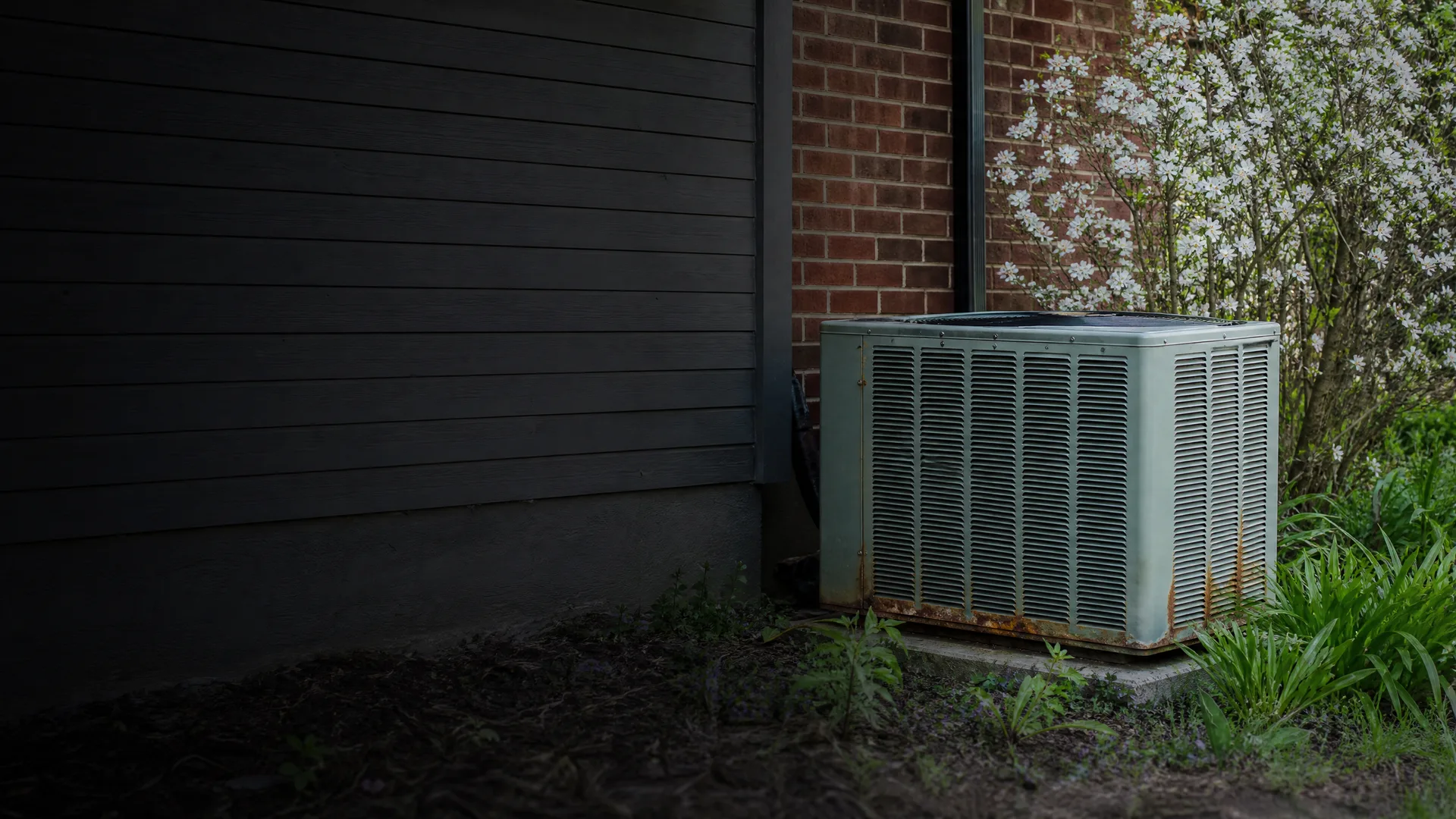
An outdoor air conditioning condenser unit on a concrete pad beside a dark horizontal-siding wall and a brick wall, with flowering shrubs and grass nearby.

You're out checking the yard on one of the first mild days of spring, and you stop by the outdoor unit. It's been sitting against the side of the house through another winter, and now you see the rust creeping along the base where the metal meets the ground. The fins look fine. The pad underneath has settled a little. You crouch down and press a thumb against the rust, wondering how many more winters this one has in it before it starts losing ground on the cold nights, the ones that matter most for what you're paying to stay warm.


How does a heat pump actually heat the house when it's freezing outside?

It sounds backward that a unit sitting outside in the cold can pull heat out of that same cold air. You've seen the outdoor unit iced over on a January morning and wondered how it's doing anything useful at that point, or whether it's just running up your bill while the real work happens somewhere else.

It pulls heat out of the outside air and moves it inside, even when that air is cold

The refrigerant inside the lines is colder than the outside air, even on a day in the teens, so it still absorbs heat as it passes through the outdoor coil. A compressor then squeezes that refrigerant, which raises its temperature further, and the indoor coil releases that heat into your house. The colder it gets outside, the harder the compressor has to work to pull the same amount of heat, which is why output drops as the temperature falls. Frost on the outdoor coil is part of normal operation. The unit periodically reverses itself to melt that frost off, then switches back to heating. None of this means the system is struggling. It means it's doing what it was built to do.

Single-story house with gray horizontal lap siding, dark shingled gable roof, a small covered front porch with a dark door, and windows, set behind a patchy green and brown lawn under a clear blue sky.

A dew point averaging 59°F across June, July and August is why your heat pump's summer side barely gets tested here. Maine air doesn't carry the moisture that Gulf Coast or Mid-Atlantic air does, so the unit spends less time pulling water out and more time just cooling. Winter is the opposite story, and it's where sizing actually matters. A contractor who's installed heat pumps for homes around here will size the unit for January, not July, since the easy summers can mask a system that's underbuilt for the cold months. If you want that checked against your own setup, getting matched with someone who works on homes like yours is the next step.

NASA POWER T2MDEW county cells weighted by homes

Get the right pro for your heat pump

A heat pump that's sized for Maine's cold will carry your house through January, but the unit already bolted to your wall might not be that heat pump. A lot of what's installed around the state was picked for the price on the quote, not for what it still puts out at 5 below. You end up finding out which one you have on the coldest night of the year, which is the worst time to find out. Getting the right size matched to your house, your ductwork or your zones, and your oil backup if you're keeping one, is a job for someone who's installed enough of these in Maine winters to know which models hold their output and which ones quietly don't. You're not stuck weighing that against your electric bill alone, and you don't have to spend another season wondering if this is the one where the cold wins. Send the request now, while the weather's still giving you time to get it right before it matters.

  1. The refrigerant inside the outdoor coil runs colder than the air itself.

  2. Cold outside air gives up heat to that colder refrigerant.

  3. The compressor squeezes the refrigerant gas, raising its temperature.

  4. Hot refrigerant moves inside and releases heat through the indoor coil.

Is your heat pump actually struggling or just working harder

On the coldest nights the outdoor unit runs almost constantly, and the air coming out of your vents feels cooler than it did in October. That alone doesn't mean anything is wrong. A heat pump works harder as the temperature drops, and on a single-digit night it may run long stretches without shutting off. What's worth paying attention to is whether the house keeps losing ground, a thermostat that won't hold its setting no matter how long the system runs, rooms that stay cold while others are fine, or the backup heat kicking on far more than it used to. If the unit is also icing over and not defrosting itself, or short-cycling instead of running steady, that points to a system that isn't matched to what this winter is asking of it.

A dark gray outdoor condenser unit on a concrete pad beside a house with beige horizontal siding, with a gray electrical disconnect box and conduit on the wall, mulch beds, a hosta plant, a shrub, and mowed lawn in front.

Running clean through the season

This is what a heat pump looks like when it's keeping up. The fins are clear, the pad is level, and nothing is blocking the airflow around it. A unit kept clear like this can pull the heat it needs even when the air outside is cold.

An outdoor air conditioning condenser unit on a concrete pad beside a house with light horizontal siding and a concrete block foundation, with bare soil and small green plants around it.

Grime that makes it work harder

Dust and grime packed into the fins block the airflow the unit needs to pull heat from cold air. A heat pump fighting through buildup like this on a January night will run longer to produce the same heat, and that shows up on the electric bill.

A weathered gray outdoor condenser unit on a concrete pad beside a house with horizontal vinyl siding, with conduit, refrigerant lines, and an electrical disconnect box on the wall behind it.
Before you get your heat pump installation
A gray outdoor condenser unit on a raised pad beside a house with horizontal lap siding, with refrigerant lines, conduit and an electrical disconnect box on the wall, and shrubs on a mulch bed to the left.
After you get your heat pump installation

What this comes down to

  • A cold-climate heat pump sized for Maine winters can still heat the house when the air outside drops into the single digits.
  • The unit has to be matched to the house and the cold here, not picked off a quote built for a milder state.
  • A heat pump running constantly on the coldest nights is doing its job, not failing at it.
  • An undersized or neglected unit will pull more expensive electricity to make up for what it can't deliver on its own.
  • Keeping the outdoor coil clear of ice and debris matters as much as the equipment itself once winter sets in.
  • Maine's mild, dry summers mean the real test of a heat pump here happens in January, not July.

A heat pump can carry a Maine house through January, but the answer depends on the unit, not the climate. Cold-climate models are built to keep producing heat as the outdoor air drops into the single digits and below, where older units gave up most of their output. The difference shows up in how the equipment is chosen. A unit sized against a quote from a milder state, or sized for the square footage alone without accounting for how cold it gets here, will fall short exactly when you need it most. One that's matched to your house and to Maine's winters won't.

What looks like trouble often isn't. A heat pump running almost nonstop on a ten-degree night is working as designed, pulling heat out of air that has little to give. Vents that feel cooler than they did in October don't mean the system is failing. The real warning signs are different: ice building up on the outdoor coil, a unit buried in snow, airflow blocked by debris against the cabinet. Those cost you the electricity you're already paying some of the highest rates in the country for, because a struggling unit draws more power to make up ground it can't make up on its own.

The other half of the answer is maintenance. A coil kept clear through the winter keeps pulling heat the way it was designed to. One left to ice over or sit blocked loses capacity no amount of sizing can fix. Between the right equipment and a clear outdoor unit, a heat pump here does what oil heat does, through the coldest months the state has.

A woman in a cream knit sweater sits in an armchair with her eyes closed and a slight smile, beside an open window showing orange autumn foliage, with a mug, books and a lit candle on a small side table.
An older man with gray hair and a beard leans back on a beige sofa with his eyes closed, in a sunlit room with potted plants, a wicker chair and large windows behind him.

Heat Pump Installation

A pro who works on heat pumps

After you send the request, you're done searching.

A black-framed smartphone standing upright against a plain white background, its screen filled with solid green.
Step 1 of 3: Equipment